
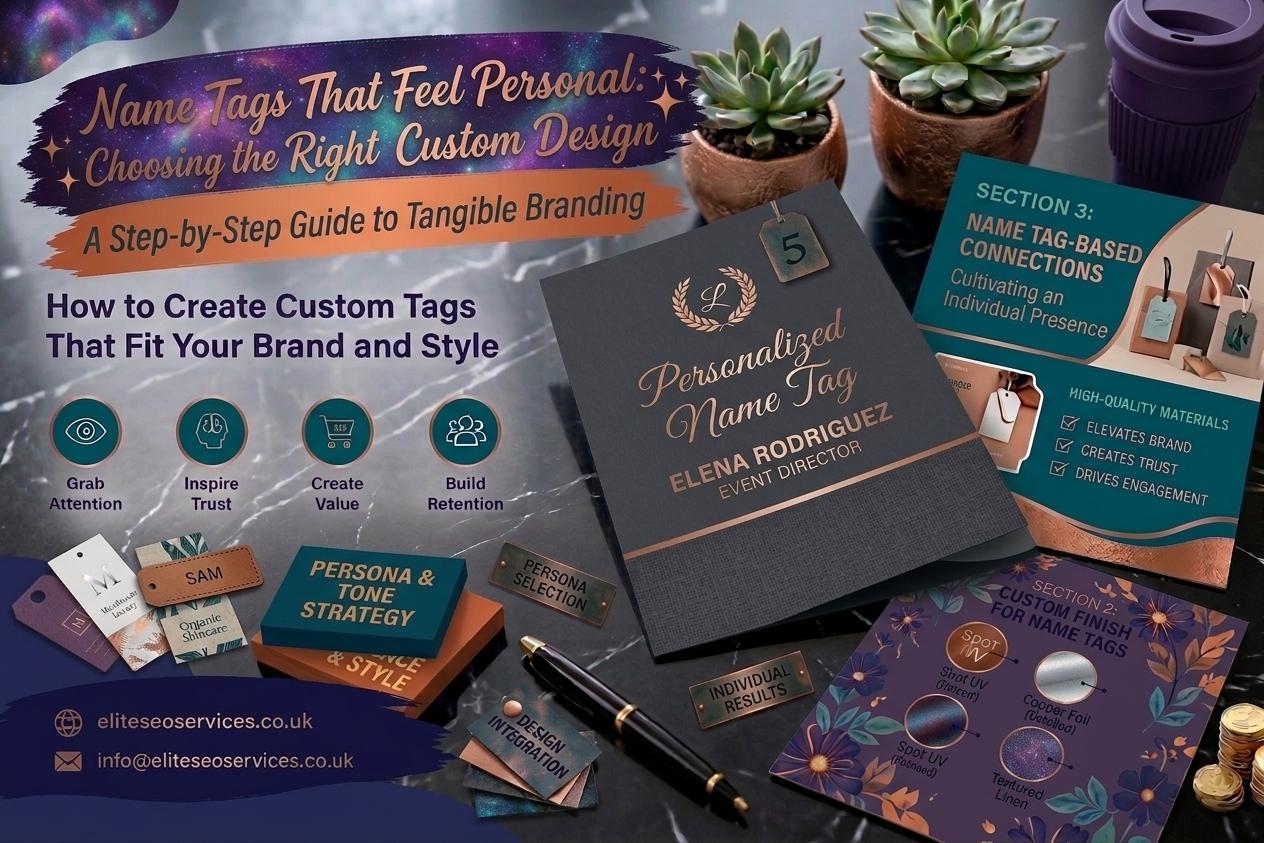
A name tag may only take up a small amount of space, but it can make something feel surprisingly personal.
Whether it is attached to a gift, used at an event, placed on a product, or created for a business, a thoughtfully designed name tag does more than display a name. It can communicate personality, create a sense of connection, and make an ordinary item feel like it was prepared specifically for someone.
The trick is choosing a design that feels personal without becoming cluttered or overly complicated.
A good custom name tag balances the person's identity, the occasion, the visual style, and the practical purpose of the tag. When those details come together naturally, the result feels much more meaningful.
Begin With the Person, Not the Template
The easiest way to make a name tag feel personal is to think about the person it represents.
Instead of starting with a ready-made design and simply replacing the name, consider what makes that person unique.
Their favorite colors, interests, personality, profession, or general style can all influence the design.
Someone who prefers simple and understated things may appreciate a clean tag with subtle details. Someone with a bright and playful personality might enjoy stronger colors or creative illustrations.
The design should feel connected to the individual rather than looking like a generic template with a name added to it.
Let the Name Become the Main Feature
When a tag is specifically created around someone's name, the name deserves attention.
You can experiment with its size, position, typography, and spacing to make it the central visual element.
A first name displayed prominently can create a friendly and informal feel, while a full name may be more appropriate for professional situations.
Even small choices can change the appearance. A bold typeface can make a name stand out, while a softer handwritten-style font can create a warmer impression.
The important thing is that the name remains easy to recognize at a glance.
Find a Style That Matches the Occasion
Not every name tag needs to look the same.
A name tag for a wedding can have an entirely different personality from one designed for a workplace gathering. A child's party tag may be colorful and playful, while a corporate event tag may need to look polished and professional.
Start by considering where the tag will be used.
For formal occasions, restrained colors and elegant typography may work well. For casual celebrations, more expressive colors and illustrations can make the design feel lively.
Matching the tag to its setting helps the personalization feel natural.
Use Colors That Say Something Without Saying Too Much
Color is one of the simplest ways to personalize a name tag.
You could use a person's favorite shade, coordinate the tag with an event theme, or choose colors that complement the item to which the tag will be attached.
However, personalization does not mean using every color available.
A focused palette usually keeps the design easier to read. One primary color paired with a neutral background and a small accent can be enough to create a distinctive look.
If several people's tags are being created for the same event, different colors can also provide individuality while keeping the overall collection visually connected.
Choose Typography With a Human Touch
The font can dramatically affect how a name tag feels.
A handwritten-style typeface can create a personal and informal atmosphere. A clean sans-serif can feel modern and straightforward. A classic serif may provide a more traditional appearance.
There is no single font that makes a tag personal.
What matters is whether the typography fits the person and the situation.
It is also worth remembering that decorative fonts can become difficult to read when the text is small. Personalization should enhance recognition, not make the person's name harder to understand.
Add One Detail That Tells a Story
A name by itself can be meaningful, but a small supporting detail can make the tag even more individual.
Think about adding a subtle symbol, tiny illustration, short phrase, or visual element connected to the person.
For a book lover, it might be a simple literary-inspired graphic. For someone who enjoys gardening, a small botanical element could work. For a child, an illustration related to a favorite interest can make the tag more exciting.
The detail does not need to explain the entire personality of the person. One thoughtful reference can be enough.
Consider How the Tag Will Be Used
Before choosing a design, think about the tag's actual job.
- Will it be worn by someone?
- Attached to a present?
- Tied to a favor?
- Used as a product identifier?
- Placed on a table?
The answer can influence everything from size to material.
A wearable name tag needs to be easy to read from a reasonable distance. A gift tag can be smaller because it is usually viewed up close. A product tag may need additional information alongside the person's or brand's name.
Design should always follow function.
Make Different Tags Feel Like a Set
Sometimes you need personalized tags for a group rather than one individual.
This could include wedding guests, employees, party attendees, students, or members of a team.
In this situation, every tag can be personalized while still sharing a common design system.
Keep certain elements consistent, such as the background, logo placement, typography, or general layout. Then personalize the name, color accent, icon, or another small feature.
This creates variety without making the collection look random.
Think Beyond Names
A custom name tag does not have to contain only a person's name.
Depending on its purpose, you can include a short role, title, table number, business name, social handle, or brief message.
For example, an event name tag might show the person's name prominently and place their role underneath in smaller text.
For a personalized gift, the name could be accompanied by a short greeting.
The key is to include only information that genuinely adds value. A small tag has limited room, and too much text can reduce its visual impact.
Choose Materials That Match the Mood
The physical material contributes to the personality of a name tag.
A smooth, clean material can support a modern aesthetic. A textured option can create a more tactile and handcrafted feel. A heavier tag can feel substantial and formal, while a lightweight option may be better suited to casual uses.
Think about how the tag will look and feel when someone actually handles it.
A beautiful design printed on a material that does not suit the occasion can feel disconnected. When the visual and physical qualities work together, the tag feels more complete.
Small Shapes Can Create Big Personality
The shape of a name tag can be another opportunity for customization.
Traditional rectangles are practical and familiar, but circles, arches, rounded corners, and custom silhouettes can create a different impression.
For playful occasions, unusual shapes may add character. For professional settings, a straightforward shape may communicate clarity.
You do not need an unusual shape simply to make the tag unique. The best shape is one that complements the design and works comfortably for its intended use.
Leave Enough Breathing Room
Personalization can tempt people to add too many details.
Names, icons, borders, patterns, colors, messages, and decorative elements can quickly compete for attention.
White space helps prevent this.
Leaving room around the name gives the design a cleaner appearance and allows the most important information to stand out.
A personal tag does not have to show everything about a person. Sometimes a name and one carefully chosen detail communicate more than a crowded design ever could.
Make the Design Comfortable to Read
A beautiful name tag is not very useful if people cannot read the name.
Pay attention to text size, contrast, spacing, and background color.
If the tag will be viewed from a distance, the name should be large enough to identify easily. If it will be attached to a small gift, you can work with a more compact layout.
Always consider the environment where the tag will appear.
A design that looks readable on a bright computer screen may appear different when printed and placed under indoor lighting.
Personal Doesn't Have to Mean Expensive
A meaningful name tag does not require an elaborate production process.
Personalization often comes from thoughtful choices rather than expensive additions.
A person's name, a suitable color, a relevant icon, and a clean layout can create a strong result without making the design unnecessarily complicated.
The goal is to make the tag feel considered.
That feeling can come from a very simple design when every element has a purpose.
Avoid Making Every Personal Detail Literal
There is a difference between personalization and decoration.
If someone likes several things, you do not necessarily need to place all of them on the tag.
Trying to represent every interest can make the design feel busy. Instead, choose the detail that best captures the intended mood.
A subtle reference can often feel more sophisticated than a collection of obvious symbols.
Think of personalization as a hint rather than an entire biography.
Give the Recipient a Reason to Keep It
Some name tags are used once and discarded. Others can become little souvenirs.
If you want a tag to have lasting appeal, design it in a way that feels more like a keepsake.
A special date, meaningful phrase, elegant illustration, or personalized message can give the tag a value beyond its original purpose.
This can work particularly well for weddings, milestone celebrations, special gatherings, and personalized gifts.
A small object becomes more memorable when it carries a moment with it.
Test the Design Before Finalizing It
Before producing a larger quantity, look at a physical sample.
Check how the name appears at the actual printed size. See whether the colors work as expected and whether the material complements the design.
If the tag will be attached to something, test the attachment as well.
Ask yourself whether the name is immediately noticeable and whether the overall design still feels balanced.
These simple checks can help catch small problems before they become part of the finished batch.
Create a Tag That Looks Like It Belongs to Someone
The strongest custom name tags do not feel personal simply because they contain someone's name.
They feel personal because the entire design supports that person's identity or the moment being celebrated.
The colors feel appropriate. The typography has the right character. The shape makes sense. The material supports the mood. The small decorative detail has meaning.
Together, these choices create something that feels intentional.
Final Thoughts
A custom name tag can be a simple way to add personality to gifts, events, products, and everyday experiences.
The best approach is to start with the individual or occasion and build the design around it. Give the name enough space to stand out, choose colors and typography thoughtfully, add one meaningful detail, and make sure the finished tag remains practical and readable.
You do not need an elaborate design to create something memorable.
Sometimes, the most personal name tag is the one that uses a few carefully chosen details to make someone think, “This was made especially for me.”
Source Link: https://ibexpackaging.com/custom-tags/