
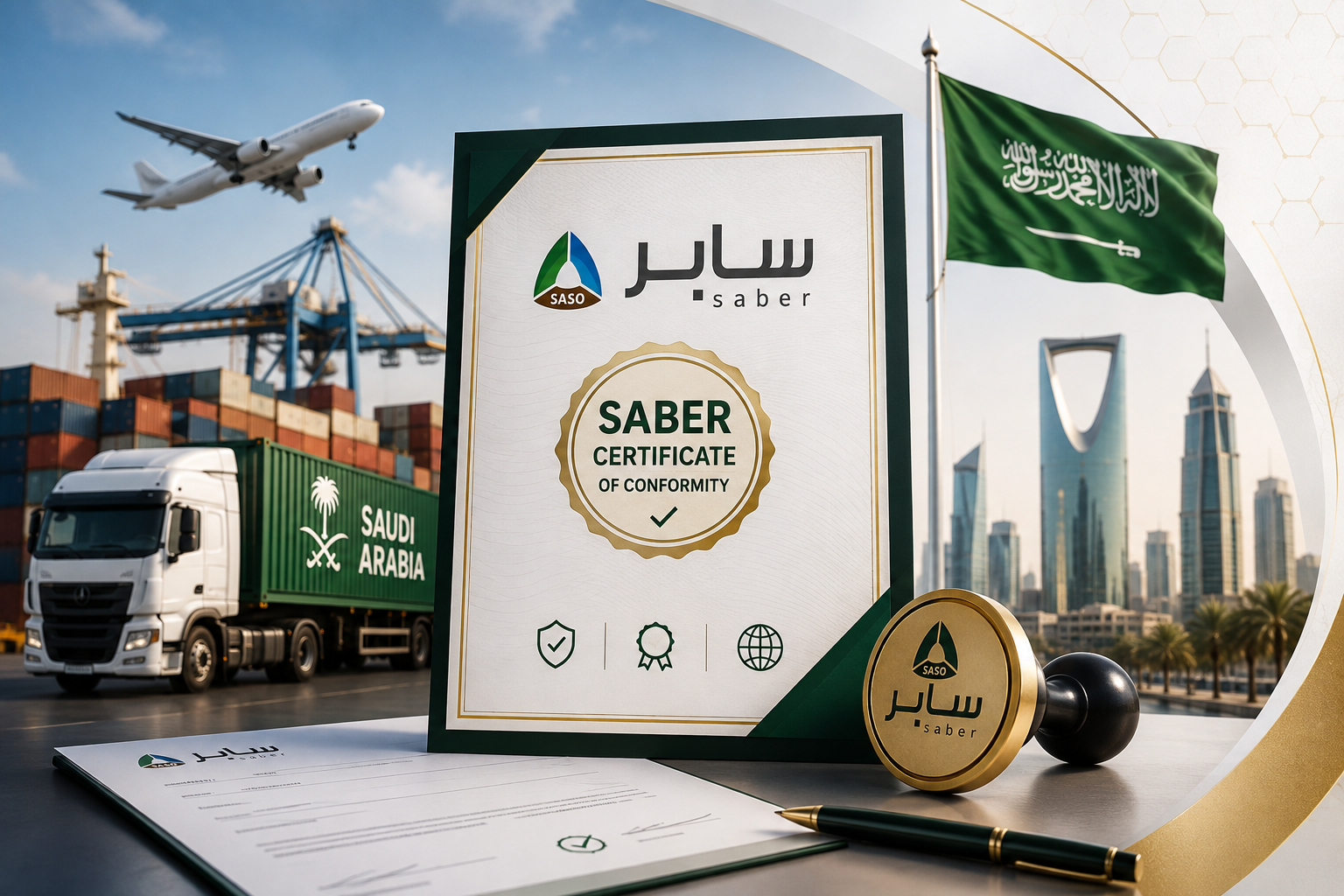
Entering the Saudi market requires businesses to understand the saber certification platform, product conformity requirements, import regulations, customs clearance procedures, SASO standards, shipment certification, and compliance documentation. The Saber platform has become a mandatory gateway for importers seeking to bring products into Saudi Arabia. Designed to simplify product registration and certification processes, it helps ensure that imported goods meet Saudi safety and quality standards. Understanding how to register on the platform and submit documents correctly can save businesses time, reduce costs, and prevent customs delays.
What Is the Saber Certification Platform?
The Saber Certification Platform is an electronic system developed by the Saudi Standards, Metrology and Quality Organization (SASO). It serves as a centralized portal where importers can register products, obtain conformity certificates, and manage compliance requirements before goods enter the Kingdom.
The platform was introduced to replace traditional paper-based certification procedures and create a faster, more transparent import process.
Key Objectives of the Saber Platform:
- Ensure product compliance with Saudi standards
- Improve customs clearance efficiency
- Reduce counterfeit and non-compliant imports
- Enhance consumer safety
- Support digital trade transformation
Today, the platform is an essential component of Saudi Arabia’s import compliance framework.
Why Saber Registration Is Important
Importers cannot legally bring many products into Saudi Arabia without completing the required registration and certification process through Saber.
Benefits of registration include:
- Faster customs clearance
- Improved regulatory compliance
- Reduced shipment delays
- Better shipment tracking
- Increased market credibility
Failure to register products properly may result in shipment holds, penalties, or rejection by customs authorities.
Understanding the Main Certificates in Saber
Before learning the registration process, it is important to understand the two main certificates issued through the platform.
Product Certificate of Conformity (PCoC)
The Product Certificate of Conformity confirms that a product complies with applicable Saudi technical regulations.
The certificate is typically valid for one year and can be used for multiple shipments of the same product.
Benefits:
- Demonstrates product compliance
- Simplifies future shipments
- Reduces customs inspection risks
Shipment Certificate of Conformity (SCoC)
The Shipment Certificate of Conformity is issued for every shipment entering Saudi Arabia.
It confirms that the imported shipment matches the previously approved product certification.
Without an SCoC, customs clearance may not be completed.
Step-by-Step Guide to Register on the Saber Platform
The registration process is straightforward when all required information and documents are prepared in advance.
Step 1: Create a Saber Account
The importer must first register on the Saber platform.
Information Required:
- Commercial Registration (CR)
- Company name
- Contact information
- Business details
- Authorized representative information
After successful registration, the company gains access to the platform dashboard.
Step 2: Log In and Access Product Registration
Once the account is active, users can begin registering products.
The platform allows businesses to:
- Add product information
- Manage certifications
- Track application status
- Monitor shipment approvals
This centralized system helps simplify compliance management.
Step 3: Classify Products Correctly
Products must be classified accurately before registration.
Categories Include:
Regulated Products
Require:
- Product Certificate of Conformity (PCoC)
- Shipment Certificate of Conformity (SCoC)
Non-Regulated Products
Require a simplified declaration process.
Correct classification is essential because different products follow different certification procedures.
Step 4: Enter Product Information
Each product must be registered individually.
Typical Information Required:
- Product name
- Brand name
- Product description
- Manufacturer details
- Country of origin
- HS code
- Product category
Providing accurate information helps avoid approval delays.
Documents Required for Saber Registration
Document preparation is one of the most important stages of the process.
Commercial Invoice
The invoice should include:
- Product descriptions
- Quantity
- Unit price
- Total value
- Supplier information
Product Specifications
Detailed technical specifications may be required for regulated products.
Examples include:
- Product manuals
- Technical datasheets
- Material information
Test Reports
Many regulated products require laboratory testing reports that demonstrate compliance with Saudi standards.
Manufacturer Documents
Importers may need:
- Manufacturer declarations
- Quality certificates
- Factory information
Product Images and Labels
Certain product categories require:
- Product photographs
- Packaging images
- Label information
These documents help certification bodies verify compliance.
How to Submit Documents Through the Saber Platform
After registering products, businesses must upload supporting documentation.
Step 1: Upload Required Files
The system allows importers to upload documents electronically.
Documents should be:
- Clear and readable
- Accurate
- Current and valid
Poor-quality uploads can result in application delays.
Step 2: Select an Approved Certification Body
For regulated products, an approved conformity assessment body must review the application.
The certification body evaluates:
- Product specifications
- Test reports
- Compliance documentation
Additional information may be requested if necessary.
Step 3: Review and Verification
The certification body conducts a detailed assessment to verify compliance with Saudi regulations.
Possible outcomes include:
- Approval
- Request for clarification
- Additional testing requirements
Once approved, the Product Certificate of Conformity is issued.
Step 4: Obtain Shipment Certification
Before importing goods, businesses must apply for a Shipment Certificate of Conformity.
Required documents typically include:
- Commercial invoice
- Packing list
- Bill of lading
- Product certification details
After approval, the shipment becomes eligible for customs clearance.
Common Mistakes During Registration
Many businesses experience delays due to avoidable errors.
Incorrect HS Codes
Using incorrect product classifications can lead to certification issues and customs delays.
Missing Documents
Incomplete applications are among the most common reasons for rejection.
Inaccurate Product Information
Differences between documents and actual product details may trigger additional reviews.
Expired Test Reports
Certification bodies may reject outdated testing documentation.
Tips for Faster Approval
Businesses can improve approval times by following several best practices.
Prepare Documents Early
Gather all required documents before starting registration.
Verify Product Classification
Confirm whether products are regulated or non-regulated before submitting applications.
Maintain Accurate Records
Ensure consistency across invoices, specifications, labels, and test reports.
Work with Experienced Compliance Experts
Professional consultants and customs clearance specialists can assist with:
- Product classification
- Documentation review
- Saber registration
- Certification management
Their expertise often reduces costly mistakes.
Benefits of Using the Saber Certification Platform
The platform offers significant advantages for importers.
Faster Customs Clearance
Electronic verification speeds up shipment processing at Saudi ports.
Improved Compliance
The platform helps businesses meet regulatory requirements more efficiently.
Better Shipment Visibility
Importers can monitor application and certification status in real time.
Reduced Administrative Burden
Digital documentation reduces paperwork and manual processes.
Future of the Saber Platform
Saudi Arabia continues to invest in digital trade modernization.
Future enhancements may include:
- Faster approval systems
- Greater automation
- Expanded product coverage
- Enhanced customs integration
- Improved user experience
Businesses that understand and adopt these systems early can gain a competitive advantage.
Conclusion
The Saber Certification Platform has become a vital tool for businesses importing products into Saudi Arabia. From product registration and document submission to conformity assessment and shipment certification, the platform streamlines compliance and supports efficient customs clearance.
By understanding the registration process, preparing accurate documentation, and following Saudi regulatory requirements, businesses can avoid delays and ensure smooth market entry. Whether you are a first-time importer or an established company expanding into the Kingdom, mastering the Saber platform is essential for successful and compliant trade operations.
As Saudi Arabia continues its digital transformation journey, effective use of the Saber Certification Platform will remain a key factor in achieving long-term success in the Kingdom’s growing marketplace.