
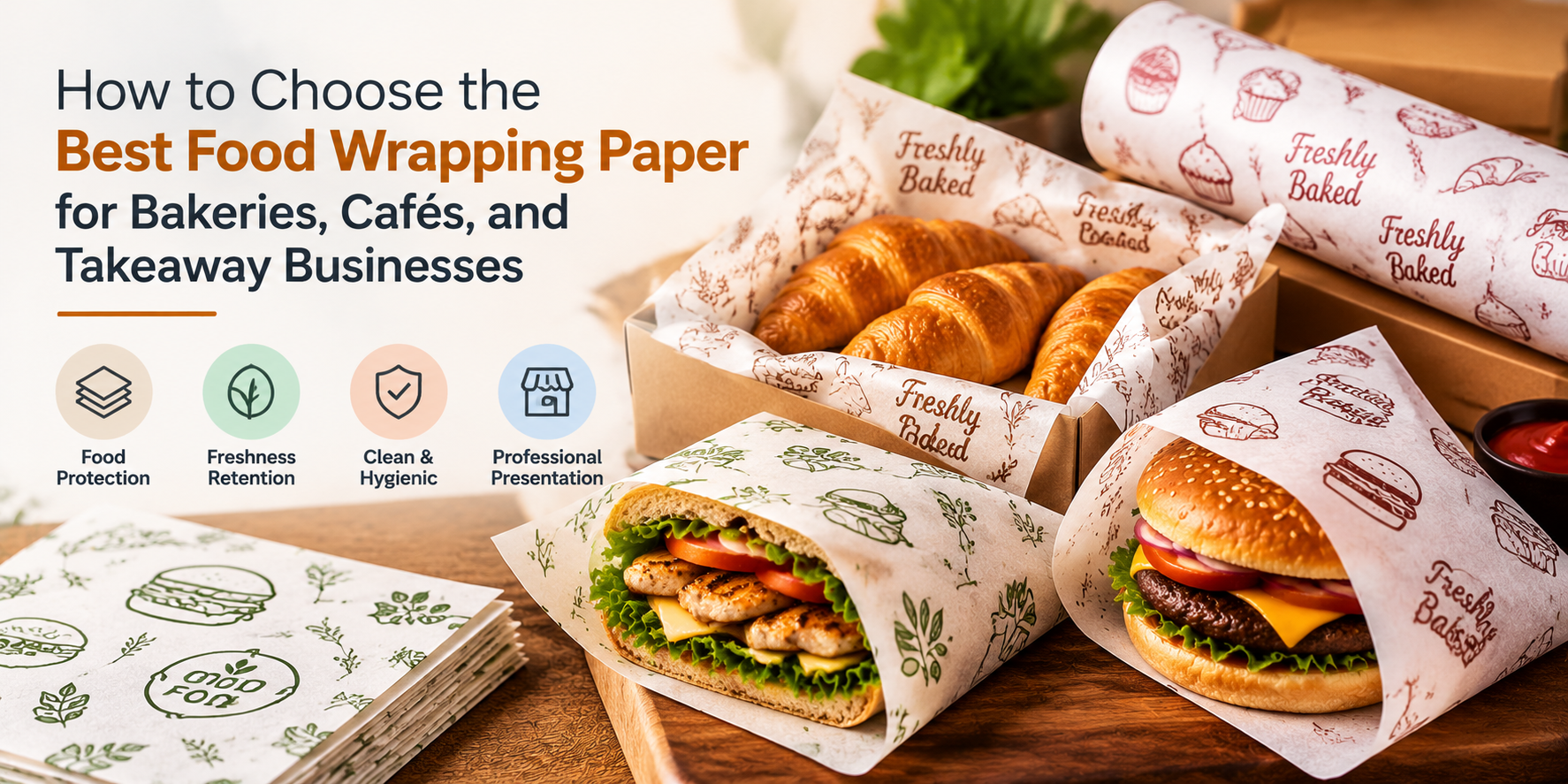
Choosing food wrapping paper may seem like a small decision, but the wrong material can create problems during food preparation, packaging, and delivery. Paper that absorbs too much oil, tears easily, or fails to protect a product can affect the customer's experience. For bakeries, cafés, and takeaway restaurants, the right choice depends on the type of food, the way it is served, and the conditions it must withstand.
Businesses also need to consider presentation. Packaging is often the first thing customers notice when they receive a takeaway order or open a bakery box. Well-chosen wrapping paper can keep products organised while giving the business a consistent, professional appearance.
Understand the Different Types of Food Wrapping Paper
Not all food wrapping papers serve the same purpose. Some are designed for wrapping dry products, while others provide resistance to grease or moisture. Understanding these differences helps businesses avoid choosing a material that does not suit their menu.
Butter paper
Butter paper is commonly used in food preparation and packaging, depending on its specifications. It may be suitable for wrapping certain bakery products, separating food items, or lining packaging.
However, the term can refer to different products in different markets. Businesses should confirm the paper's intended use, particularly when it will come into direct contact with food.
Greaseproof paper
Greaseproof paper is designed to resist the penetration of fats and oils. This makes it a useful option for many products that would otherwise leave greasy marks on ordinary paper.
Bakeries may use suitable grease-resistant paper for pastries and baked goods, while takeaway businesses may need it for burgers, sandwiches, or fried snacks. The level of resistance varies by product, so testing the paper with the actual food is advisable.
Baking parchment
Baking parchment is designed for use in baking when the product specifications allow it. It can help prevent food from sticking to baking trays and is available in versions intended for particular oven temperatures.
It should not automatically be treated as a substitute for every type of wrapping paper. Businesses should check the manufacturer's instructions before using it for cooking, wrapping, or serving food.
Waxed and coated papers
Some food packaging papers contain waxes or other coatings that provide specific moisture or grease-resistance properties. Their suitability depends on the coating, intended application, and temperature conditions.
These materials may be useful for particular products, but businesses should check whether the paper is appropriate for direct food contact and whether its coating affects disposal or recycling options.
Match the Paper to the Food You Sell
The most practical way to choose wrapping paper is to start with the menu. A bakery selling dry biscuits has different requirements from a takeaway restaurant preparing hot burgers.
For bakeries and pastry shops
Croissants, muffins, cookies, and pastries all have different textures and fat contents. Dry biscuits may need little more than suitable food-contact wrapping, whereas buttery pastries may require better grease resistance.
Paper dimensions also matter. A sheet that is too small can leave the product exposed, while an oversized sheet may create unnecessary waste. Bakeries should test a few sizes with their most popular products before ordering large quantities.
For cafés and sandwich shops
Sandwiches and wraps can release moisture, especially when they contain tomatoes, sauces, or freshly prepared ingredients. The wrapping material needs to suit the product and the expected time between preparation and consumption.
A café serving takeaway sandwiches should consider how the paper performs during handling and transport. The packaging should remain practical without making the food difficult to unwrap.
For burger and takeaway restaurants
Burgers, fried snacks, and other oily foods often need stronger grease resistance than dry bakery products. The paper should be tested under realistic serving conditions, including the food's temperature and the amount of oil it releases.
Restaurants should also consider how the wrapped item fits inside a takeaway box or delivery bag. A suitable combination of wrapping paper and outer packaging can make orders easier to handle.
Why Paper Quality Matters
Price is important, particularly for businesses that package hundreds of products each day. Still, buying the cheapest paper without checking its performance can lead to avoidable waste.
Paper that tears during wrapping may slow down staff. Material that allows grease to pass through may leave marks on bags, boxes, or customers' hands. Poorly sized sheets can also increase consumption because employees need to use more paper than necessary.
Before choosing a supplier, businesses should review the paper's dimensions, thickness or weight, intended application, and resistance properties. A sample order is a useful way to compare products under normal working conditions.
It is also worth checking how consistently a supplier can provide the same specifications. A business that relies on a particular paper for daily operations benefits from knowing that future orders will meet its requirements.
Should You Choose Plain or Custom Printed Wrapping Paper?
Plain paper can be a sensible option for businesses that prioritise simple packaging and want to keep initial costs low. It may be particularly suitable for small businesses that are still testing their menu or refining their packaging process.
Custom printed paper offers another advantage: it allows the business to display its name, logo, or brand colours directly on the packaging. This can help create a consistent look across takeaway orders, bakery boxes, and other food packaging.
For example, a neighbourhood bakery could use a repeating logo pattern on paper wrapped around selected pastries. A café might coordinate its sandwich wrapping with its takeaway cups, while a burger restaurant could use a distinctive design that matches its boxes and bags.
When considering custom printed butter paper, businesses should review the available material options, printing specifications, minimum order quantities, and suitability for their products before making a decision.
The artwork should be easy to recognise at the size it will be printed. Simple patterns and readable logos often work better than designs with too many small details. Requesting a proof before production can help prevent errors in spelling, colour, and logo placement.
Consider Food Safety Before Placing an Order
Food-contact suitability should be a basic requirement when selecting wrapping paper. A product that looks appropriate may not be suitable for every food type or serving condition.
Businesses should ask suppliers for relevant food-contact documentation and confirm whether the paper can be used with hot, fatty, or moist foods. If the paper is printed or coated, its inks and coatings should also be appropriate for the intended application.
Temperature is another consideration. Paper designed for wrapping food after preparation may not be suitable for use in an oven or direct contact with very hot surfaces.
Staff should store packaging in a clean, dry area and handle it in a way that prevents contamination. Even suitable packaging cannot protect food properly if it is stored or used incorrectly.
How to Reduce Food Packaging Costs Without Sacrificing Quality
Controlling packaging costs starts with understanding actual usage. A business can track how many sheets it uses each week, identify products that require more material, and adjust sheet sizes where practical.
Buying in bulk may reduce the unit price, but it is important to compare the complete cost. Delivery charges, storage space, minimum order quantities, and the risk of holding unused stock can affect the final value.
Businesses should also consider whether one suitable paper can serve several products without compromising performance. For instance, a bakery might standardise wrapping sizes for a group of similar items, making stock management easier. However, a single material should not be used across products with different requirements unless it is appropriate for all of them.
Another useful step is to train staff to wrap products consistently. Clear procedures can reduce excessive paper use and help maintain a neat presentation during busy periods.
What to Check When Comparing Packaging Suppliers
A reliable supplier should be able to explain the product specifications clearly. Before placing an order, businesses should confirm the material type, sheet or roll dimensions, available print options, minimum quantity, delivery timeframe, and pricing structure.
It is also useful to request samples, especially when purchasing a product for the first time. Testing samples with actual menu items can reveal problems that may not be obvious from a product description.
For printed packaging, businesses should check the artwork requirements and approval process. They should also confirm whether setup fees or additional printing charges apply.
Ordering arrangements matter as well. A supplier that communicates clearly about lead times and product availability can make it easier to plan stock levels and avoid last-minute purchases.
Are Paper-Based Food Packaging Options More Sustainable?
Paper-based packaging can support certain environmental goals, but its impact depends on how it is manufactured, printed, used, and disposed of.
Uncoated paper may be easier to recycle than some coated or laminated alternatives. However, grease contamination and local recycling rules can affect whether used food packaging is accepted for recycling. Some products may also require specialist disposal facilities to meet compostability claims.
Businesses should request accurate information from suppliers rather than assuming that every paper product is recyclable, biodegradable, or compostable.
Reducing unnecessary packaging is another practical consideration. Choosing suitable sheet sizes, managing stock carefully, and avoiding excessive wrapping can help businesses use materials more efficiently.
Final Thoughts
The best food wrapping paper is the one that suits the product, performs reliably during normal use, and fits the business's budget. Bakeries may prioritise grease resistance for pastries, cafés may need practical wrapping for sandwiches, and takeaway restaurants may require materials that handle oily foods without tearing.
Before making a bulk purchase, businesses should compare specifications, test samples, confirm food-contact suitability, and consider how the packaging will be stored. Those steps help prevent costly mistakes and make day-to-day packaging easier to manage.
Custom printing can then add a recognisable visual identity without replacing the practical requirements of good food packaging. By choosing the material first and the design second, food businesses can create packaging that works well for their products and presents their brand consistently.