
Erectile dysfunction (ED) is a common condition that can affect a man's confidence, intimate relationships, and overall quality of life. Although medications, lifestyle changes, and other treatments help many men, some continue to experience difficulties achieving or maintaining an erection. For these individuals, a penile implant may be an effective treatment option.
Penile implant surgery is a medical procedure designed to help men with persistent erectile dysfunction achieve an erection suitable for sexual activity. It involves placing a device inside the penis through surgery. The implant is generally considered when less invasive treatments have not provided satisfactory results or are unsuitable for the patient.
In this comprehensive guide, we explain what a penile implant is, how it works, the available types, the surgical procedure, potential benefits and risks, recovery expectations, and important considerations for patients in Pakistan.
What Is a Penile Implant?
A penile implant, also called a penile prosthesis, is a surgically placed medical device that helps a man achieve an erection. It is primarily used to treat erectile dysfunction that has not responded adequately to other treatments.
Unlike medication, which helps the body's natural erection mechanisms function, a penile implant provides a mechanical way to create penile rigidity. The implant is placed internally, so it is not usually visible from the outside.
Penile implants do not generally increase penis length or treat the underlying cause of erectile dysfunction. Instead, their primary purpose is to improve erectile function and help suitable patients resume sexual activity.
Who May Benefit From Penile Implant Surgery?
A penile implant may be considered for men who:
-
Have persistent erectile dysfunction despite appropriate treatment.
-
Cannot tolerate certain ED medications because of side effects.
-
Do not achieve satisfactory results with oral medications or other therapies.
-
Have specific medical conditions affecting the blood vessels or nerves involved in erections.
-
Prefer a long-term, procedural treatment after discussing the alternatives with a qualified urologist.
A penile implant is not usually the first treatment offered for erectile dysfunction. A healthcare professional should assess the patient's medical history, symptoms, expectations, and previous treatments before recommending surgery.
Types of Penile Implants
There are two main categories of penile implants. The most suitable option depends on a patient's anatomy, health, preferences, and the surgeon's assessment.
1. Inflatable Penile Implant
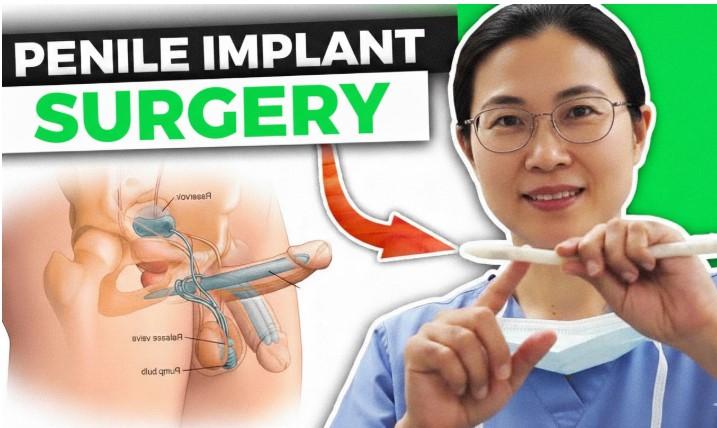
An inflatable implant uses fluid-filled cylinders placed inside the penis. Depending on the model, the system also includes a pump and a fluid reservoir.
Three-piece inflatable implant
This type generally consists of three components:
-
Two cylinders positioned inside the penis.
-
A pump placed inside the scrotum.
-
A fluid reservoir placed inside the body.
When an erection is desired, the patient operates the pump to transfer fluid into the cylinders. This makes the penis firmer. After sexual activity, the release mechanism allows the fluid to return to the reservoir.
Three-piece implants are designed to provide a firm erection and a more natural-looking flaccid state when deflated.
Two-piece inflatable implant
A two-piece implant combines the fluid-storage system with the pump mechanism, reducing the number of separate components. It may be suitable for selected patients, although the erection and deflation experience can differ from that of a three-piece system.
2. Malleable or Semirigid Penile Implant
A malleable implant consists of bendable rods inserted into the penis. The patient manually positions the penis upward for sexual activity and downward when it is not needed.
Potential advantages include a relatively simple mechanical design and ease of use. However, the penis remains somewhat firm, which can make concealment less convenient than with an inflatable implant.
A urologist can explain the differences between implant models and help determine which option is appropriate.
How Does a Penile Implant Work?
The way a penile implant works depends on its design.
With an inflatable implant, the patient activates the internal pump to move fluid into the cylinders, creating rigidity. Afterward, the device is returned to its resting state using the release mechanism.
With a malleable implant, the patient manually adjusts the position of the penis.
Both options are intended to provide sufficient firmness for sexual intercourse. Neither implant automatically produces sexual desire, and neither directly treats problems such as low libido or premature ejaculation.
Common Causes of Erectile Dysfunction
Erectile dysfunction can have several causes, and identifying them is an important part of treatment planning.
Physical Causes
-
Diabetes and related nerve or blood-vessel damage.
-
High blood pressure and cardiovascular disease.
-
Reduced blood flow to the penis.
-
Hormonal problems, including low testosterone in some patients.
-
Neurological conditions.
-
Pelvic injuries or previous pelvic surgery.
-
Certain prescription medications.
-
Smoking, obesity, and physical inactivity.
Psychological Causes
Stress, anxiety, depression, relationship difficulties, and performance anxiety can also contribute to erectile dysfunction. Some men experience a combination of physical and psychological factors.
A penile implant may be appropriate for selected cases of persistent ED, but a comprehensive evaluation is important before proceeding to surgery.
Penile Implant Surgery: Step-by-Step Process
Penile implant surgery is performed by a qualified urologist or another appropriately trained specialist in a suitable medical facility.
Step 1: Medical Assessment
The doctor reviews the patient's symptoms, medical history, medications, previous treatments, and expectations. Relevant examinations and investigations are arranged as needed.
The assessment may include checking for diabetes, cardiovascular risk factors, hormonal concerns, or other conditions that could affect treatment.
Step 2: Choosing the Implant
The patient and surgeon discuss the available devices, their advantages and limitations, the expected outcome, and the possibility of complications.
Step 3: Preparation for Surgery
The healthcare team provides instructions about medications, fasting, infection prevention, and recovery arrangements. Antibiotics may be used according to the clinical protocol.
Step 4: Implant Placement
The procedure is performed under an appropriate form of anesthesia. The surgeon places the implant components through a surgical incision and checks their position and function.
The technique and duration depend on the device, the patient's anatomy, and whether additional surgical considerations are present.
Step 5: Initial Recovery
After surgery, the patient receives instructions for pain management, wound care, hygiene, activity restrictions, and follow-up appointments.
The patient should not attempt to operate an inflatable device or resume sexual activity until the treating surgeon confirms that it is appropriate.
Benefits of Penile Implant Surgery
For appropriately selected patients, penile implant surgery can offer several benefits.
Reliable Erectile Function
The device provides a mechanical method of achieving penile rigidity without depending on the same physiological processes required for a natural erection.
Long-Term Treatment Option
Penile implants are designed for long-term use. However, they are mechanical devices and may eventually require revision or replacement.
Greater Control
Inflatable implants allow the user to control when the penis becomes firm and when it returns to a resting state.
Potential Improvement in Confidence
Some patients experience improved confidence and sexual satisfaction after successful treatment. Results vary, and expectations should be discussed before surgery.
Alternative When Other Treatments Fail
For men who have not benefited from other appropriate therapies, an implant may provide another option for managing persistent erectile dysfunction.
Possible Risks and Complications
Penile implant surgery is an established treatment, but it involves important risks that patients should understand.
Potential complications include:
-
Infection around the implant.
-
Bleeding, swelling, or postoperative pain.
-
Mechanical malfunction.
-
Device erosion or displacement.
-
Changes in penile sensation.
-
Scarring or other surgical complications.
-
Difficulty operating the device.
-
The need for additional surgery or implant replacement.
Infection can be particularly serious and may require removal of the device. Individual risks depend on medical history, surgical factors, and the type of implant.
Patients should contact their healthcare team promptly if they experience fever, increasing redness, worsening pain, unusual drainage, or other concerning symptoms after surgery.
Recovery After Penile Implant Surgery
Recovery varies from person to person. The surgeon will provide instructions based on the procedure and the patient's health.
First Few Days
Some pain, bruising, and swelling may occur. Prescribed medication, rest, and careful wound management can help during this period.
First Few Weeks
Patients are generally advised to avoid strenuous activity and follow restrictions on lifting, exercise, bathing, and sexual activity. Follow-up visits allow the medical team to assess healing.
Resuming Sexual Activity
Sexual activity is usually postponed until the surgeon confirms adequate healing. For many patients, this is around four to six weeks, but the appropriate timeline varies.
Long-Term Care
Patients should attend follow-up appointments and seek medical advice if the device becomes painful, difficult to operate, or appears to be malfunctioning.
Does a Penile Implant Increase Penis Size?
A penile implant is designed to provide rigidity rather than increase penis length or girth.
Some men feel that their penis appears shorter after surgery compared with their memory of erections before erectile dysfunction developed. This may reflect changes associated with the underlying condition, reduced frequency of full erections, scar tissue, or differences in expectations.
The surgeon should discuss realistic outcomes before the procedure. Patients should not assume that an implant will enlarge the penis.
Does a Penile Implant Affect Sexual Pleasure?
A penile implant is intended to improve erectile rigidity. It does not directly create sexual desire or guarantee a particular level of pleasure.
Many patients can still experience orgasm and ejaculation after surgery if those functions were present beforehand and are not affected by other medical conditions. However, orgasm, ejaculation, sensation, and erection quality are separate aspects of sexual function.
The implant's effect on sexual satisfaction depends on multiple factors, including the patient's health, expectations, partner communication, and the reason for erectile dysfunction.
How Long Does a Penile Implant Last?
Penile implants are intended to provide long-term treatment, but no device lasts indefinitely.
Longevity depends on the implant model, usage, individual factors, and mechanical wear. Some implants function for many years, while others may require repair or replacement sooner.
Patients should ask their surgeon about device-specific durability, warranty information, maintenance expectations, and what happens if a component fails.
Penile Implant Cost in Pakistan
The cost of penile implant surgery in Pakistan varies according to several factors, including:
-
The type and brand of implant.
-
The hospital or surgical facility.
-
The surgeon's fees.
-
Anesthesia and operating-room charges.
-
Preoperative investigations.
-
Medication and postoperative follow-up.
-
Whether additional treatment or revision surgery is needed.
Inflatable implants may cost more than malleable implants because of their more complex components.
There is no single price that applies to every patient. For an accurate estimate, patients should request an itemized quotation from a qualified urologist or hospital and confirm which implant, hospital services, and follow-up care are included.
Penile Implant Treatment in Lahore and Multan
Men experiencing erectile dysfunction can seek an assessment from a qualified urologist or men's health specialist in Pakistan. A professional evaluation helps identify the cause of ED and determine whether medication, lifestyle changes, other therapies, or surgery may be appropriate.
Dot Clinics has locations in Lahore and Multan. Patients interested in erectile dysfunction care should contact the relevant branch to confirm which services are available, whether specialist referrals are provided, and whether penile implant surgery is offered directly or through a referral to a surgical facility.
Patients should verify the surgeon's qualifications, the implant type, hospital arrangements, infection-prevention procedures, total cost, and postoperative follow-up before making a decision.
Alternatives to Penile Implant Surgery
An implant is not the only treatment for erectile dysfunction. Depending on the cause and severity, alternatives may include:
Oral medications: Certain prescription medicines can improve erectile function, but they are not suitable for everyone and may interact dangerously with nitrate medications.
Lifestyle changes: Regular physical activity, smoking cessation, weight management, improved sleep, and control of diabetes or high blood pressure may improve erectile health.
Vacuum erection devices: These devices use suction to draw blood into the penis and may be used with a constriction ring.
Penile injections or urethral medication: Selected treatments can help some patients achieve an erection under medical guidance.
Psychological or relationship support: Counseling may help when anxiety, stress, depression, or relationship concerns contribute to erectile difficulties.
A healthcare professional can explain the potential benefits, risks, and limitations of each option.
Frequently Asked Questions About Penile Implants
1. Is penile implant surgery safe?
It is an established surgical treatment, but it carries risks, including infection, mechanical failure, and the possibility of further surgery. A specialist can assess individual risks.
2. Is the implant visible from the outside?
Most of the device is placed inside the body. An inflatable implant's pump may be felt inside the scrotum, while a malleable implant may make the penis feel firmer even when positioned downward.
3. Can a man urinate normally after penile implant surgery?
The implant is designed to address erectile function, not urination. Many patients can urinate normally, but temporary urinary difficulties or other complications can occur. Any new urinary symptoms should be discussed with the treating clinician.
4. Can a penile implant cure erectile dysfunction permanently?
An implant provides a way to achieve rigidity, but it does not necessarily cure the underlying cause of ED. It is intended as a long-term treatment, and future device problems or replacement may occur.
5. Will the implant affect fertility?
A penile implant does not directly restore sperm production or treat infertility. Fertility depends on other factors, including sperm production and reproductive health. Patients planning to have children should discuss any concerns with their doctor.
6. Can a penile implant be removed?
Yes, an implant can be removed or replaced through surgery when medically necessary. Removal and revision carry risks, and the outcome depends on the circumstances.
7. Is penile implant surgery suitable for every man with ED?
No. It is generally considered for selected patients after assessment and discussion of alternative treatments. Medical conditions, surgical risks, anatomy, and expectations all matter.
8. When can a patient resume normal activities?
The recovery timeline varies. Patients should follow their surgeon's instructions and wait for medical clearance before resuming strenuous exercise or sexual activity.
Conclusion
A penile implant can be a valuable treatment option for men with persistent erectile dysfunction who have not achieved satisfactory results with other therapies. Inflatable and malleable implants offer different features, and the appropriate choice depends on the patient's medical needs, preferences, and the surgeon's recommendations.
Before choosing surgery, patients should understand the expected benefits, possible complications, recovery requirements, device lifespan, and total cost. Consulting a qualified urologist is the best way to determine whether a penile implant is appropriate.
Medical disclaimer: This article is for educational purposes only and does not replace professional medical advice, diagnosis, or treatment. Anyone experiencing erectile dysfunction should consult a qualified healthcare professional for an individualized assessment.