
Changes in penile shape or curvature can be worrying, particularly when they develop unexpectedly or begin to affect sexual activity. One possible cause is Peyronie’s disease, a condition in which scar tissue forms inside the penis and causes it to bend, curve, or change shape during an erection.
Although Peyronie’s disease is not usually life-threatening, it can affect physical comfort, sexual performance, confidence, and intimate relationships. Understanding how the condition develops and which treatments are available can help men make informed decisions about their health.
What Is Peyronie’s Disease?
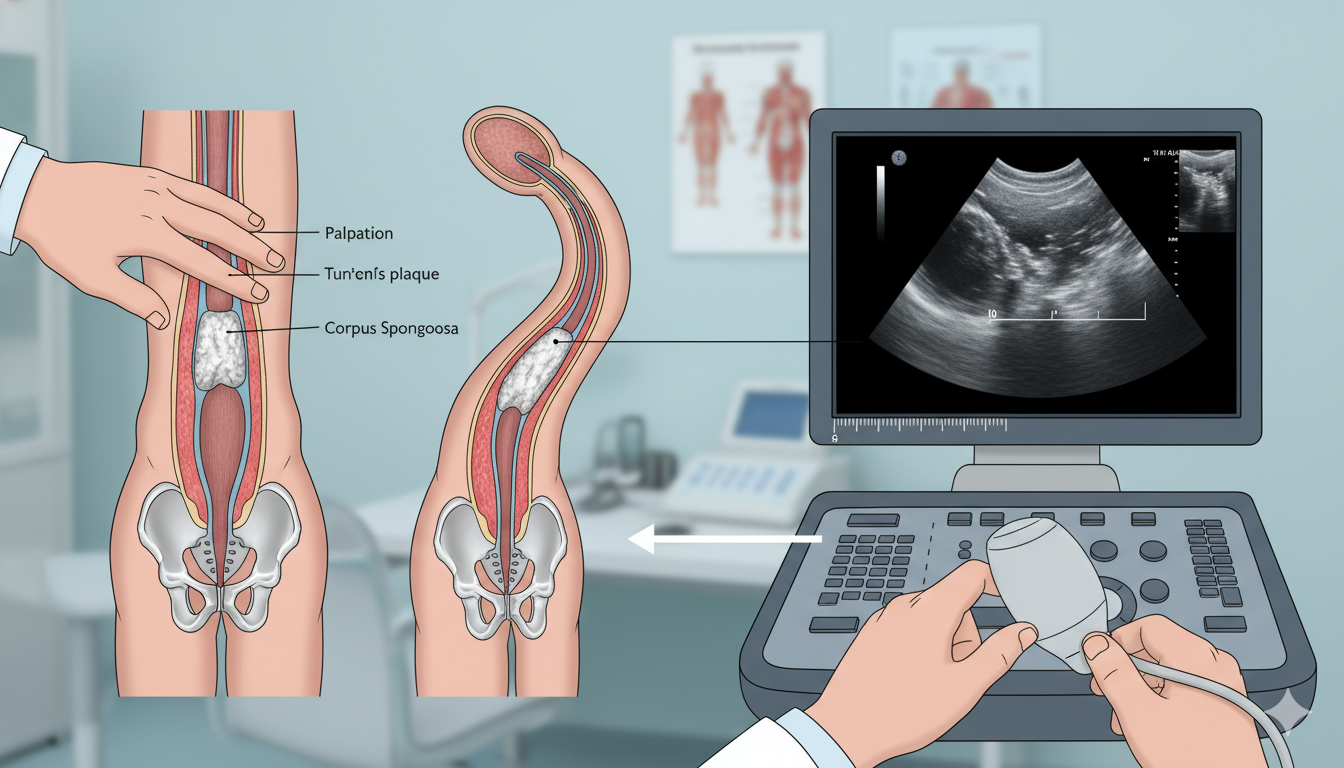
Peyronie’s disease is a condition involving the development of fibrous scar tissue, known as plaque, within the tunica albuginea—the tough tissue surrounding the erectile chambers of the penis.
During an erection, the healthy tissue expands as blood fills the erectile chambers. However, scar tissue does not stretch in the same way. This difference in flexibility can cause the penis to bend toward the affected area.
The degree of curvature varies from person to person. Some men experience a slight bend without discomfort, while others develop significant deformity, pain, shortening, or difficulty having sexual intercourse.
Peyronie’s disease is an acquired condition, meaning that the curvature develops over time rather than being present from birth.
Early Signs and Symptoms of Peyronie’s Disease
Recognizing the early symptoms can help men seek medical advice before the condition begins interfering with their daily lives.
Common signs include:
-
Unusual penile curvature: The penis bends upward, downward, or to either side during an erection.
-
Hard areas beneath the skin: Plaque may feel like a firm lump or flat area along the penile shaft.
-
Pain during erections: Discomfort may occur when the penis becomes erect.
-
Penile shortening: Some men notice that their erect penis appears shorter than before.
-
Indentations or narrowing: Scar tissue can create dents, an hourglass appearance, or uneven thickness.
-
Difficulty with intercourse: Severe curvature or instability may make penetration uncomfortable or difficult.
-
Erectile difficulties: Some men experience problems achieving or maintaining an erection.
Symptoms are not identical for everyone. A man may have curvature without pain, or he may experience several symptoms together.
What Causes Peyronie’s Disease?
The exact cause is not fully understood. However, researchers believe that abnormal wound healing plays an important role.
Small injuries to the penis may occur during sexual activity or other physical activities. In some men, the healing process may produce excessive scar tissue instead of normal, flexible tissue.
Potential contributing factors include:
1. Repeated Minor Penile Injuries
Repeated bending or pressure may cause small injuries to penile tissue. These injuries are not always noticeable, and many men cannot remember a specific event that triggered the condition.
2. Abnormal Wound Healing
In some individuals, the body's healing response may lead to excessive collagen production and the development of fibrous plaques.
3. Age-Related Changes
Peyronie’s disease is more commonly diagnosed in middle-aged and older men, although younger men can also develop it.
4. Genetic Predisposition
Some men may have an inherited tendency toward abnormal scar formation. A family history of Peyronie’s disease or certain connective-tissue conditions may increase susceptibility.
5. Associated Medical Conditions
Certain health conditions, including diabetes and connective-tissue disorders, may be associated with Peyronie’s disease. However, having one of these conditions does not mean a person will necessarily develop penile curvature.
Different Types of Penile Curvature
Peyronie’s disease can affect the shape of the penis in several ways.
Upward curvature: The penis bends toward the abdomen during an erection.
Downward curvature: The penis bends toward the feet.
Sideways curvature: The shaft curves toward the left or right.
Hourglass deformity: A section of the shaft becomes narrower, creating an hourglass-like appearance.
Indentation or hinge effect: One area becomes weak or indented, sometimes causing the penis to bend at that point during an erection.
The location, size, and flexibility of the plaque influence the type and severity of the deformity.
The Two Main Stages of Peyronie’s Disease
Doctors generally describe Peyronie’s disease in terms of an active phase and a stable phase.
Active Phase
During the active phase, the condition may still be changing. Symptoms can include:
-
Increasing penile curvature.
-
Pain during erections.
-
Changes in penile shape.
-
Development or enlargement of plaque.
-
Progressive shortening or indentation.
This phase can last several months or longer. Pain may gradually improve even if curvature remains.
Stable Phase
The stable phase begins when the curvature and deformity have stopped changing for a period of time. Pain often decreases or disappears.
Treatment decisions become easier during this stage because the doctor can assess the established shape of the penis and determine whether intervention is appropriate.
How Is Peyronie’s Disease Diagnosed?
An accurate diagnosis is important because penile curvature can have different causes. A urologist can evaluate symptoms, examine the penis, and recommend appropriate investigations.
The diagnostic process may include:
Medical history: The doctor asks when the curvature started, whether it is changing, whether erections are painful, and whether sexual activity has become difficult.
Physical examination: The penis is examined for palpable plaques, tenderness, and areas of abnormal tissue.
Erection assessment: Photographs of an erection taken privately may help document the direction and degree of curvature. In some cases, a medically induced erection is used during assessment.
Penile ultrasound: Ultrasound can help identify plaque, evaluate tissue structure, and assess blood flow when clinically indicated.
The doctor uses these findings to distinguish Peyronie’s disease from congenital curvature and other penile conditions.
Treatment Options for Peyronie’s Disease
Treatment depends on the severity of curvature, the stage of the disease, pain, erectile function, and the effect on sexual activity.
Not every patient requires an invasive procedure. Some men with mild symptoms may only need monitoring.
1. Observation and Regular Monitoring
Men with mild curvature, little discomfort, and no significant difficulty with intercourse may not need immediate treatment.
Regular follow-up appointments allow the doctor to monitor changes and determine whether further intervention is necessary.
2. Pain Management
Pain can occur during the active phase. A doctor may recommend appropriate pain-relieving medication when necessary.
Pain management can improve comfort, but it does not remove the plaque or reliably correct penile curvature.
3. Penile Traction Therapy
Penile traction devices apply controlled stretching to the penis over prescribed periods.
For selected patients, traction therapy may help improve curvature or preserve or improve penile length. Results depend on the device, treatment schedule, and individual response.
Patients should receive medical guidance before using traction devices to avoid excessive pressure or injury.
4. Collagenase Injections
Collagenase clostridium histolyticum is an injectable treatment used in some countries for carefully selected patients.
The medication helps break down collagen within the plaque. It is generally used alongside a prescribed penile modelling programme.
Eligibility depends on factors such as plaque location and curvature. Availability differs between countries, and treatment carries risks, including bruising, swelling, pain, and rarely serious penile injury.
5. Other Plaque-Directed Injections
Other injectable treatments, including verapamil and interferon, have been studied for Peyronie’s disease. Their availability and supporting evidence vary, and they are not equally established options.
A urologist can explain whether any of these treatments are appropriate.
6. Erectile Dysfunction Treatment
Some men with Peyronie’s disease also experience erectile dysfunction (ED). When erection problems occur, they may need separate evaluation and treatment.
Depending on the cause and severity, treatment may involve oral medication, vacuum erection devices, injections, or other medically supervised options.
Treating ED can improve sexual function, although it does not necessarily correct the underlying penile curvature.
7. Surgical Treatment
Surgery may be considered when the disease is stable and the curvature significantly interferes with sexual intercourse.
Common surgical approaches include:
-
Penile plication: Stitches are used to shorten the longer side of the penis and reduce curvature. Some shortening may occur.
-
Plaque incision or excision with grafting: The affected tissue is released or partly removed, and a graft may be used to restore the shape. This approach carries a risk of erectile dysfunction and other complications.
-
Penile prosthesis: An implant may be considered for men who have significant erectile dysfunction that does not respond adequately to other treatments. Additional procedures may be used to address curvature.
The best surgical option depends on penile shape, erectile function, existing length, and individual treatment goals.
Can Peyronie’s Disease Go Away on Its Own?
Peyronie’s disease does not always resolve without treatment. In some men, pain improves naturally, and the condition eventually becomes stable. However, established scar tissue and curvature may remain.
Some men experience little progression, while others develop more noticeable deformity.
Early medical assessment is useful because it helps establish the diagnosis, monitor changes, and identify suitable treatment options.
Does Peyronie’s Disease Affect Sexual Performance?
Yes. The condition can affect sexual performance in several ways.
Severe curvature may make penetration difficult or uncomfortable. Pain during erections can reduce sexual confidence, while associated erectile dysfunction may make it harder to maintain an erection.
The emotional impact can also be significant. Some men experience embarrassment, anxiety, or concerns about intimacy.
Open communication with a partner and appropriate medical support can help address these challenges.
Can Peyronie’s Disease Be Prevented?
There is no guaranteed way to prevent Peyronie’s disease because its exact cause is not completely understood.
However, certain precautions may help reduce the risk of penile injury:
-
Avoid positions or activities that place excessive bending pressure on the erect penis.
-
Use adequate lubrication during sexual activity.
-
Avoid forcing the penis into an uncomfortable position.
-
Seek medical attention after a significant penile injury.
-
Manage existing health conditions with appropriate medical care.
These precautions cannot guarantee prevention, but they may help reduce avoidable trauma.
When Should You See a Doctor?
Consider consulting a urologist if you notice:
-
A new or worsening penile curve.
-
Pain during erections.
-
A hard lump or plaque beneath the penile skin.
-
Changes in penile length or shape.
-
Difficulty with sexual intercourse.
-
Erectile dysfunction associated with penile curvature.
Seek urgent medical attention if a sudden injury causes a popping sound, immediate loss of erection, severe pain, bruising, or swelling. These symptoms may indicate a penile fracture rather than ordinary Peyronie’s disease.
Frequently Asked Questions About Peyronie’s Disease
1. Is Peyronie’s disease a serious condition?
It is generally not life-threatening, but it can cause significant physical and psychological difficulties. Severe curvature, pain, and erectile dysfunction may interfere with sexual activity.
2. Can Peyronie’s disease cause permanent curvature?
Yes. Established scar tissue can cause persistent curvature, even after pain has disappeared or the condition has become stable.
3. Does Peyronie’s disease affect fertility?
Peyronie’s disease does not usually directly affect sperm production. However, severe curvature or erectile difficulties may make intercourse and natural conception more challenging.
4. Is Peyronie’s disease the same as congenital penile curvature?
No. Congenital curvature is generally present from birth or becomes noticeable during puberty. Peyronie’s disease develops later because of fibrous plaque formation.
5. Can medication straighten the penis?
Some treatments may help selected patients, but there is no single medication that reliably straightens every penis affected by Peyronie’s disease. Treatment depends on the individual condition.
6. Is surgery always necessary?
No. Many men do not require surgery. It is generally considered when the condition is stable and the deformity significantly affects sexual function.
7. Can Peyronie’s disease return after treatment?
Recurrence or persistent deformity is possible, depending on the treatment and individual circumstances. Follow-up care helps monitor long-term outcomes.
Conclusion
Peyronie’s disease is an acquired condition caused by fibrous plaque formation inside the penis. It can lead to curvature, pain, shortening, indentation, and difficulties with sexual activity. Although the condition can be distressing, several management options are available.
The most appropriate treatment depends on the stage of the disease, the degree of curvature, erectile function, and the patient's personal needs. Consulting an experienced urologist is the best way to understand the condition and explore suitable treatment options.
Medical Disclaimer: This article is intended for general educational purposes and should not replace professional medical advice, diagnosis, or treatment. Men experiencing penile curvature, pain, or erectile difficulties should consult a qualified healthcare professional.