
Hey everyone, quick question: When was the last time a game made you sweat over two keyboard keys?
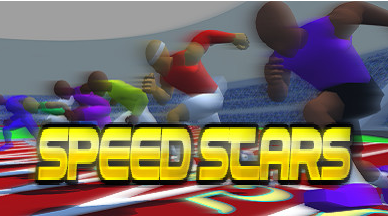
Look, we’ve all been there. You tell yourself, "I have twenty minutes before bed; I'll just check Reddit or watch a quick video." Welcome to my current obsession: Speed Stars
Then, someone casually drops a link to a browser-based athletics simulator, and suddenly it’s 3:14 AM. Your index and middle fingers are cramping, your posture resembles a melted candle, and you are emotionally invested in shaving 0.02 seconds off a digital 100-meter dash.
If you haven’t run across this little gem yet, consider this your official warning. It looks simple, it feels hilarious, and it is easily one of the most addictive physics-driven sports titles floating around the web right now.
Here is a breakdown of what the game is, why it works so well, and why you should probably kiss your afternoon productivity goodbye.
What on Earth is Speed Stars?
At its core, Speed Stars is a track-and-field physics runner. There are no massive 80GB downloads, no intrusive anti-cheat engines melting your CPU, and no pay-to-win microtransactions trying to sell you neon-colored running spikes.
You boot up the page, step onto the track, and run.
On paper, it sounds like those classic button-mashing retro track games from the 80s and 90s—think Track & Field on the NES. But don't let the clean, minimalist look fool you. Beneath that retro-inspired surface lies an unforgiving, hilarious, and surprisingly realistic physics engine.
In traditional runners, you mash a button to go fast. In Speed Stars, you don't just "run"—you control momentum, stride frequency, balance, and center of gravity. One clean sequence sends your athlete gliding down the lane like an Olympic champion; one mistimed tap transforms you into an uncoordinated toddler tumbling across the finish line.
How to Play: Easy to Learn, Brutal to Master
The beauty of Speed Stars is that the control scheme can be explained in about five seconds. Mastering it, however, is an entirely different sport.
1. The Core Mechanic: Rhythmic Cadence
Forget chaotic keyboard smashing. If you start violently hammering your keys like you’re typing an angry email, your runner will lock up, lose balance, and stumble.
Instead, the game requires rhythm. You alternate controls to cycle your runner’s legs. Tap-tap, tap-tap, tap-tap.
- Find the sweet spot between stride length and leg turnover.
- Push too slow? You get left in the dust.
- Push too fast out of sync? Your athlete's legs flail wildly, fighting against their own momentum.
2. The Start Out of the Blocks
The race is often won or lost in the first twenty meters. Getting out of the starting blocks requires precise reaction timing. Explode out too early, and you risk a false start. Wait too long, and you are playing catch-up against lightning-fast ghosts. Getting into an upright running posture without breaking your stride is an art form.
3. Events & Distances
While the classic 100m Sprint is the fan favorite, the game keeps things fresh with different events:
- Short Sprints (60m, 100m, 200m): Pure acceleration, top-end speed, and raw rhythm.
- Hurdles: Just when you think you've figured out your leg cycle, the game throws obstacles in your way. Timing your takeoff and landing without faceplanting into hurdle number four requires zen-like focus.
- Longer Distances: Testing your stamina management and consistency over extended runs.
Why Is It So Ridiculously Addictive?
Why are thousands of players obsessing over simple two-button running mechanics? A few big reasons:
1. The Comedy of Ragdoll Physics
Physics-based games have a special kind of magic. No two runs ever look exactly identical. When things go right, it looks cinematic and smooth. When things go wrong, it is pure, unscripted slapstick comedy. Watching your athlete lean back too far, lose their footing, and slide on their stomach across the finish line never stops being funny.
2. The "One More Run" Syndrome
Races last between 9 and 20 seconds. Because each attempt is so lightning-fast, failure doesn't feel frustrating—it feels instantly fixable.
"Ah, I botched the start. Let me restart."
"Wait, I stumbled at the 60m mark. One more."
"9.82 seconds?! My personal best is 9.79! Just one more."
Before you know it, an hour has evaporated into the void.
3. High Skill Ceiling & Ghost Racing
You aren't just competing against random AI. The game lets you race against split-second ghosts, pushing you to analyze where you lost speed. Did your head tilt too high at 40 meters? Did you lose turnover cadence near the tape? For competitive players, chasing the global leaderboard or beating your own personal records delivers a massive dopamine hit.
Pro-Tips for Newbies (Save Your Wrists!)
If you're heading in for your first session, keep these hard-earned community tips in mind:
- Don't Panick-Smash: Smooth inputs beat frantic inputs every single time. Listen to the tempo of the footstrikes.
- Watch the Lean: Body angle matters. Drive forward early, but don't over-lean once you hit top speed, or you'll eat rubber.
- Take Micro-Breaks: Your fingers aren't used to keeping a 180-BPM cadence on two keys. Shake out your hands every few races.
Verdict: Is It Worth Your Time?
In an era where modern gaming often demands hundreds of gigabytes of storage, multi-hour tutorials, and endless battle passes, games like Speed Stars are a breath of fresh air. It strips away all the fluff and focuses on pure, unadulterated, skill-based fun.
It’s simple enough for a casual five-minute break at work or school, yet deep enough to spark intense rivalries between friends trying to settle who has the fastest fingers in the group chat.
Ready to see how fast you actually are?
Lace up your virtual spikes, stretch those fingers, and hit the track at speed stars
Drop your best 100m time in the replies below—just don’t blame me when you find yourself running sprints at 2 in the morning!